

- cross-posted to:
- usa@midwest.social
- cross-posted to:
- usa@midwest.social
The article title is click bait here is the full article:
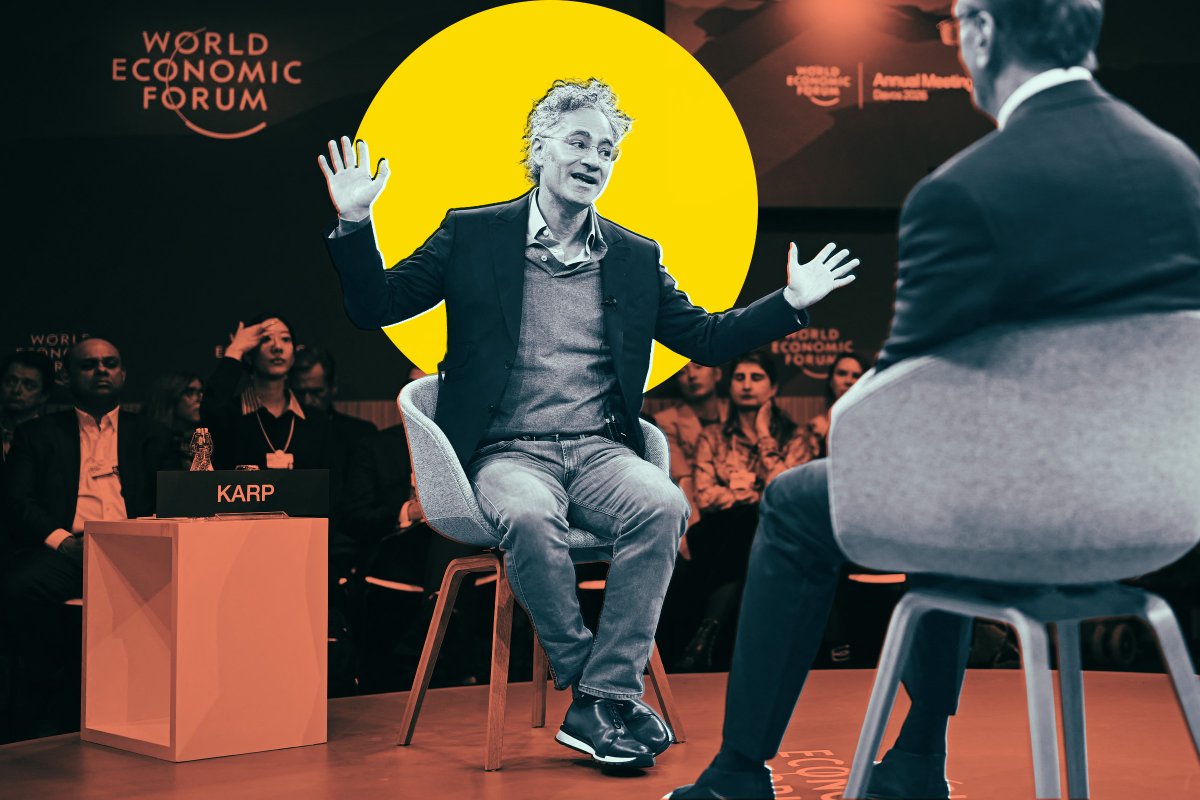
Wondering what your career looks like in our increasingly uncertain, AI-powered future? According to Palantir CEO Alex Karp, it’s going to involve less of the comfortable office work to which most people aspire, a more old fashioned grunt work with your hands.
Speaking at the World Economic Forum yesterday, Karp insisted that the future of work is vocational — not just for those already in manufacturing and the skilled trades, but for the majority of humanity.
In the age of AI, Karp told attendees at a forum, a strong formal education in any of the humanities will soon spell certain doom.
“You went to an elite school, and you studied philosophy; hopefully you have some other skill,” he warned, adding that AI “will destroy humanities jobs.”
Karp, who himself holds humanities degrees from the elite liberal arts institutions of Haverford College and Stanford Law, will presumably be alright. With a net worth of $15.5 billion — well within the top 0.1 percent of global wealth owners — the Palantir CEO has enough money and power to live like a feudal lord (and that’s before AI even takes over.)
The rest of us, he indicates, will be stuck on the assembly line, building whatever the tech companies require.
“If you’re a vocational technician, or like, we’re building batteries for a battery company… now you’re very valuable, if not irreplaceable,” Karp insisted. “I mean, y’know, not to divert to my usual political screeds, but there will be more than enough jobs for the citizens of your nation, especially those with vocational training.”
Now, there’s nothing wrong with vocational work or manufacturing. The global economy runs on these jobs. But in a theoretical world so fundamentally transformed by AI that intellectual labor essentially ceases to exist, it’s telling that tech billionaires like Karp see the rest of humanity as their worker bees.
It seems that the AI revolution never seems to threaten those who stand to profit the most from it — just the 99.9 percent of us building their batteries.
I actually don’t think this is true. I used to think it was true, but after seeing more and more people I think it’s simpler than that. It’s a belief in the justness of hierarchy— the “great chain of being” from medieval thought, where people on the top both deserve to be there by right of being there, and it is right to submit to them.
On a certain level, I even see the point. Despite anarchist clams to the contrary, leaders are important, necessary even to accomplish anything greater than a single person can manage. Even kids can see this first hand the first time they get assigned a group project by their teacher, or try to win a game of sports. But it’s too easy to twist “we need a good leader” into the tautology of “the leader is good, right, and justified because he’s the leader”.
If everyone rebelled against leadership all the time, there’d be no leadership, and people do need leaders. But at the same time, leaders can be or become shitstains that need to be rebelled against. It’s difficult, and I don’t think being reductive about the difficulty is right.