

cross-posted from: https://lemmy.zip/post/59925291
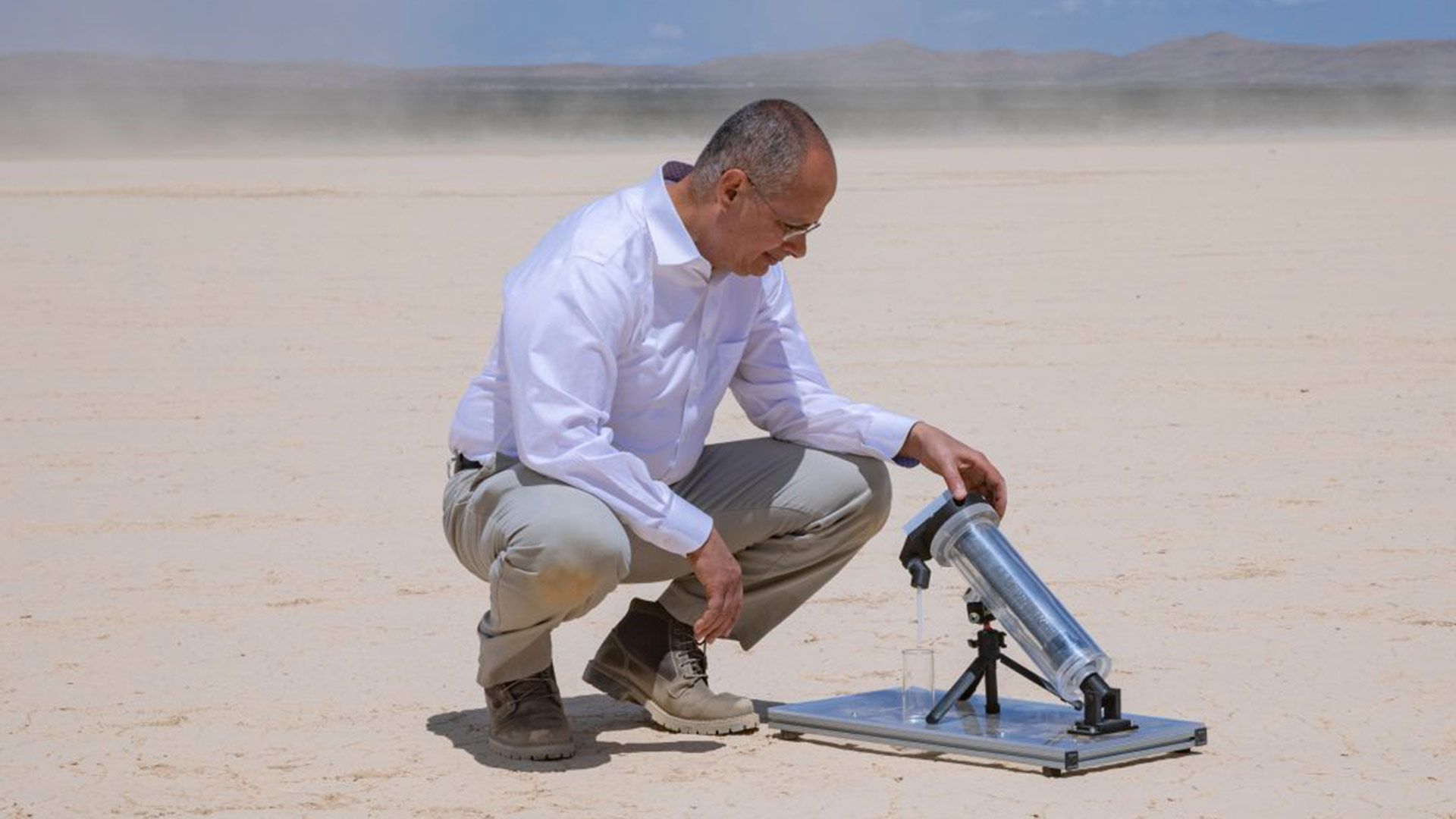
The system can function in air with 20% humidity or less. But these 1,000 liter a day machines are not small, at around shipping container size.
cross-posted from: https://lemmy.zip/post/59925291
The system can function in air with 20% humidity or less. But these 1,000 liter a day machines are not small, at around shipping container size.
There’s two impacts these panels could have. There’s the solar irradiation aspect, and the air humidity aspect of them.
In the solar irradiance balance, you have a net energy in, most of which goes directly to heating the ground. A panel would aim to absorb as much as that energy as you can, most of which would go towards a phase change of the material to release the water bonds. MOFs are extremely clean in terms of their re-usability, and don’t release any other compounds into the steam when released. Think of it like a condensation system, but without having to collect any water from any ground based source.
The air humidity is the other balance. In theory you could “absorb all the water out of the air”. In most business cases, these need to be deployed to more coastal regions, not literally smack in the middle of the desert. But in such cases, the atmosphere is highly dynamic and more or less equalizes total air water content in a certain microclimate. It makes it very renewable since the sun evaporates massive amounts of water from water bodies, which can be returned via either rain, or through water harvested through water-from-air chemistry.
The industry will want to buy water regardless of where they are, so when evaluating technologies, these provide much lower impact to the environment than any existing groundwater based system.