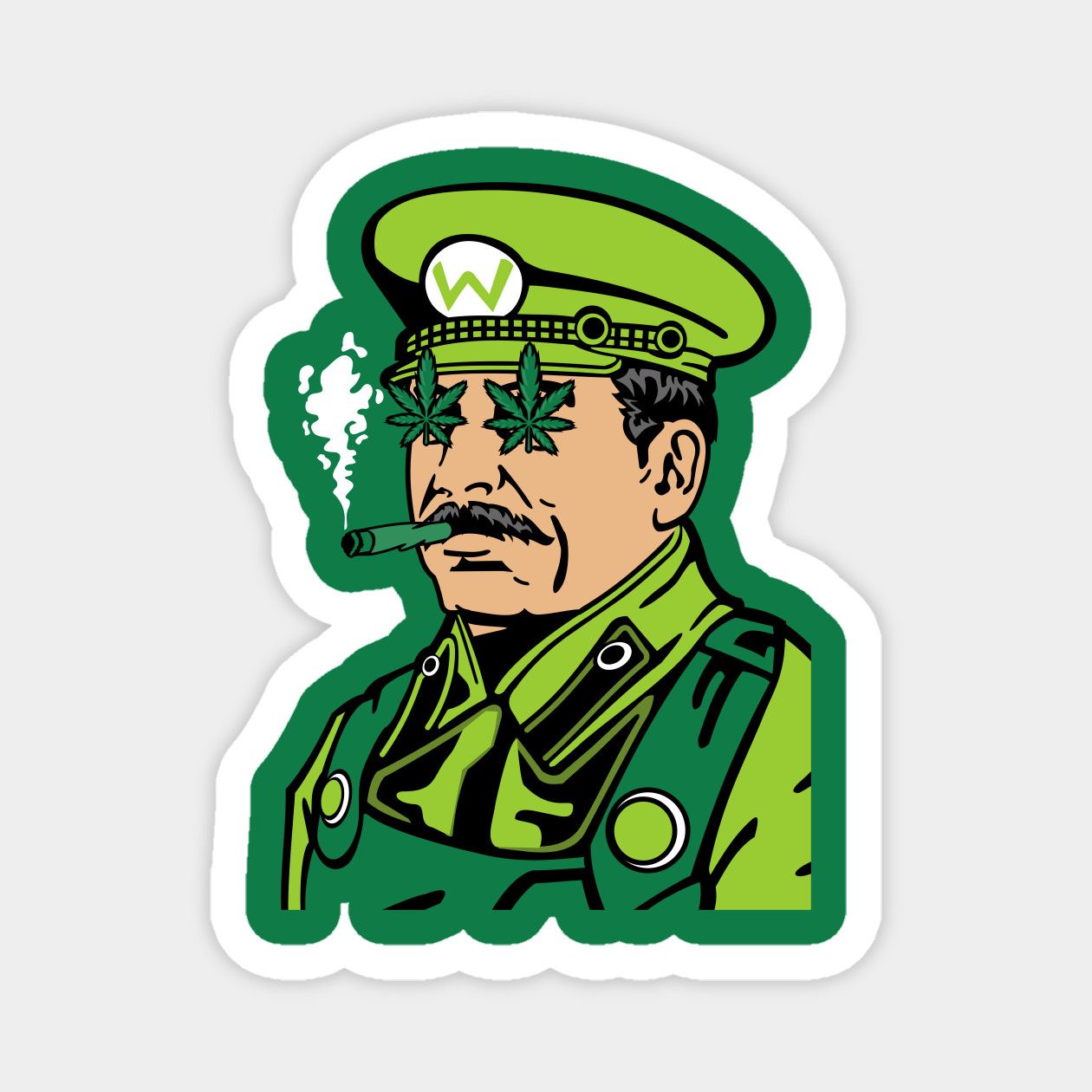
I was going to argue against this, but then you’re right. There has been regulatory capture of socdems as they became neoliberals; who keep chasing the magical “centrist” unicorn. But in reality, who they are trying to appease are the property owning base who want their property value to keep going up and up, at the expense of the youths, families and homeless, and to appease rich donors.
The Social Democratic Party of Germany (SPD) historically opposed the Communist Party of Germany (KPD) due to ideological differences, particularly regarding the approach to socialism and the use of revolutionary tactics.
I wonder how that worked out. Oh, right.
What does this even mean? do you think that welfare is fascist?
The meme is about how socialdemocrats entire ideology is built upon “reforming” capitalism by implementing a welfare state to more evenly spread the profits of the super exploitation of the periphery. When those profits dry up so too does the welfare state which inevitably pushes them right or left to deal with the heightened contradictions. The meme is pointing out the unfortunate pattern of it almost always ending in a rightward shift (due to many factors). (It is also possibly a reference to the SPD and how them unleashing the freikorps on the KPD directly helped bring Hitler to power)
socialdemocrats entire ideology is built upon “reforming” capitalism by implementing a welfare state to more evenly spread the profits of the super exploitation of the periphery.
when put like this, social democracy is really the peak of “half of slaveowners should be women!” ideology lol
Thank you for breaking this down. Would it be fair to say that social democracy on a national scale can still be imperialist but social democracy on a global scale would actually be a good thing? I guess when I see social democracy equated with fascism it leaves me wondering what is actually the better path.
No. Social democracy needs superprofits from the periphery to fund the core. Capitalism requires exploitation to function. If every nation is the core, who gets exploited? The surplus value does not exist. When accumulation slows, the bourgeoisie abandons reform. They choose fascism to protect property. The SPD proved this when they sided with reactionaries against workers. Reformism tries to manage a system built on violence. It cannot work globally because the economic base forbids it. The only path is revolution. Seize the means of production. End the imperialist chain.
Social democracy needs superprofits from the periphery to fund the core.
But there are social democratic parties in developing countries.
Those “social democratic” parties in the periphery aren’t proof the model works globally. They’re rebranded revolutionary movements (MPLA, FRELIMO, ANC) that dropped Marxist-Leninist labels after the Soviet Union collapsed. Without that protection, they faced a stark choice: adopt the language of the Socialist International or risk regime change, sanctions, or outright intervention by the imperial core. The label shift was a survival tactic, not evidence that social democracy can function in a peripheral economy (because it can’t).
The label shift was a survival tactic
Fair, but why can’t social democracy function in a peripheral (=developing?) country?
Social democracy needs superprofits from the periphery to fund the core. Social democracy is a type of capitalism. Capitalism requires exploitation to function. If every nation is the core, who gets exploited? The surplus value does not exist.
Democratic socialism. I know it sounds a little bit ridiculous because the names are so similar, but the key difference is social democrats are fundamentally capitalists, while democratic socialists believe that capitalism will inevitably always lead to what we’ve got now. We know we have the resources to house everyone, clothe everyone, feed and educate everyone on earth. The only reason we don’t is because it’s not profitable for a handful of billionaires. Democratic socialists believe that everyone born on earth has the same rights to what the earth has to offer, and that we could give all of us a reasonable quality of life if resources were managed in a way that benefits the most people and not just the shareholders.
Obviously there’s a lot more to it, and I’m fully expecting a reply to this that starts with Well actually… but that’s the 10 second version from someone who doesn’t claim to be an expert.
 5·4 days ago
Instead of well actuallying it, I would like to ask: how? How do you get these resources to be managed “better.” How do we go from where we are now to what you have stated?
As I said, I’m not an expert, but this guy has some really good ideas and his channel is definitely worth a look. A good starting point would be to look at the Nordic countries (Sweden, Norway, Denmark), as they are the closest in practice to this kind of system and consistently have the best quality of life and happiness among their citizens.
The Nordic countries are the very same imperialist social democracies we have been talking about.
They also entirely fund their system through super exploitation of the periphery.
They are social democrats though
“I’m not a social democrat, I’m I democratic socialist, look at these social democrat countries I support!”
Could you please try a little harder
Any reason not to just throw out these terms and talk about it as capitalism vs communism?
Lots of reasons. Democratic socialism doesn’t eliminate private ownership the way communism does, people can still get rich, own companies, and buy jet skis, but they can’t take a successful company that hundreds of people have helped build and centred their lives around and hand control of it to their unqualified, arrogant, spoiled children to run into the ground, among other things. Here’s a decent basic summary:
*Democratic socialism combines political democracy with public, cooperative or state ownership of key industries while maintaining elections, civil liberties and pluralism. It seeks to reduce inequality and ensure that wealth and power serve the public good through taxation, regulation and social programs.
Communism, rooted in Marxist theory, envisions a classless, stateless society where all property is collectively owned. In practice, communist states have often used centralized, one-party government control to pursue those aims.* (edit: don’t know why italics isn’t working)
Communism is democratic. In practice, what you call democratic socialism is either social democracy, ie not socialist at all, or reformist socialism, in which it isn’t at all successful in establishing socialism. Communist parties have successfully established socialism and democratic systems via revolutionary means.
Democratic socialism doesn’t eliminate private ownership the way communism does, people can still get rich, own companies, and buy jet skis
No, you’re describing social democracy.
Democratic socialism combines political democracy with public, cooperative or state ownership of key industries while maintaining elections, civil liberties and pluralism.
No, that’s socialism
I’m getting a little lost - you said both “social democracy” and “democratic socialism” there. I just want to be sure that was intentional? I’m still a little unclear what the better system’s rules are. I don’t mean to be ungrateful for the explanation, but this section in particular didn’t clear anything up for me:
people can still get rich, own companies, and buy jet skis, but they can’t take a successful company that hundreds of people have helped build and centred their lives around and hand control of it to their unqualified, arrogant, spoiled children to run into the ground
So… okay, but how is this codified in law? No inheriting?
They’re using the terms wrong, don’t worry that you can’t follow; they’re not being consistent
You’re right, apologies, I fucked up there. Changed it to democratic socialism (still not an expert!).
At the most basic level, employees at a workplace would elect their management, rather than management being chosen by the business owner/s.
I posted this link to another comment, it’s from a guy who runs a really good youtube channel that’s definitely worth checking out. I know being asked to watch a video sucks, but he explains it a million times better than I can.
edit: don’t know why italics isn’t working
I think multi-line italics isn’t a thing. Although you may actually want to prefix the lines with > to make it into a quote like the first line of this comment.
socialdemocrats entire ideology is built upon “reforming” capitalism by implementing a welfare state to more evenly spread the profits of the super exploitation of the periphery.
Technically, it’s built on the idea that a socialist society can be/should be reached gradually by participating in parliamentary liberal political system instead of overthrowing liberal society and implementing a “dictatorship of the proletariat”.
At least that was what the original debate was about (“reform vs revolution”) that split the left apart. Since then, most social democrats have completely moved away from the idea of reaching a socialist society anytime soon (for various reasons).
The meme is pointing out the unfortunate pattern of it almost always ending in a rightward shift
The meme is clearly pointing out that “social democracy enjoyers” turn into fascists/Nazis once the economy declines. Or, if we keep OP’s caption in mind, the idea that social democrats are actually fascists “wearing a mask”.
directly helped bring Hitler to power
What helped Hitler seize power was not just the actions/inactions of the socdems and the economic collapse, but the deep split of the left overall, the ineffective political system and the relentless infighting to the point were socdems and communists saw eachother as equivalent or even a bigger threat than the fascists.
Technically, it’s built on the idea that a socialist society can be/should be reached gradually by participating in parliamentary liberal political system instead of overthrowing liberal society and implementing a “dictatorship of the proletariat”.
You are mixing social democrats with democratic socialists. Democratic socialists, however ineffective or utopian, at least retain socialist aims in theory. Social democrats do not. Their program, accepts the permanence of capitalist property relations. Their project is not the abolition of exploitation but its rationalization: a “fairer” distribution of imperial superprofits among the labor aristocracy of the core. This is not a path to socialism. It is a management strategy for capitalism.
The meme is clearly pointing out that “social democracy enjoyers” turn into fascists/Nazis once the economy declines. Or, if we keep OP’s caption in mind, the idea that social democrats are actually fascists “wearing a mask”.
The social democrat’s mask, like the liberal’s, depends entirely on the surplus extracted from the periphery. When that flow contracts, the mask comes off. In the words of Malcolm X on a similar issue: “The white conservatives aren’t friends of the Negro either, but they at least don’t try to hide it. They are like wolves; they show their teeth in a snarl that keeps the Negro always aware of where he stands with them. But the white liberals are foxes, who also show their teeth to the Negro but pretend that they are smiling.” Social democracy operates the same way. Its niceties are financed by imperial rent. When the rent falls, it defaults to open class defense.
What helped Hitler seize power was not just the actions/inactions of the socdems and the economic collapse, but the deep split of the left overall, the ineffective political system and the relentless infighting to the point were socdems and communists saw eachother as equivalent or even a bigger threat than the fascists.
I explicitly said “helped,” not “solely responsible.” Multiple factors converged in 1933. But the SPD’s role was decisive in one key respect: they preserved the bourgeois state apparatus after 1918. Through the Ebert-Groener pact, they kept the reactionary judiciary, the imperial officer corps, and the bureaucratic machinery intact. They unleashed the Freikorps on the KPD. They refused every proposal for a united working class front against the Nazis. Stalin characterized this relationship precisely when he stated that “Social-Democracy is objectively the moderate wing of fascism” and that these organizations “are not antipodes, they are twins.” The KPD’s analysis recognized that in a crisis, social democracy functions as the left wing of counterrevolution. History confirmed that analysis.
You are mixing social democrats with democratic socialists.
The origin and core of social democracy is clearly socialist and, in many cases, Marxist. Of course this was more and more deluted over time until today, were many social democratic parties have indeed completely abandoned their socialist roots even in theory.
However, historically, social democracy overall can (and imo should) still be seen as reformist socialism, at least partially. The way I see it, it’s that the parties have abandoned social democracy by embracing neo-liberalism. have abandened those goals completely (e.g. modern German SPD, British Labour)
One could also argue that social democratic parties pretty much always had a leftist wing and a liberal wing, this is true today as well for the most part.
Its niceties are financed by imperial rent.
Isn’t everything/anything existing under capitalism financed by imperial rent?
How is it different to China, for example, who also participates in the global capitalist economy and benefits from it?
When that flow contracts, the mask comes off.
When has this happened? Do you have a specific example of a social democratic party turning fascist (actually curious)? Turning neo-liberal, sure, but to me at least, equating neo-liberalism with fascism is an oversimplification. Or is the argument that socdem turns into neo-liberalism, neo-liberalism turns into fascism, ergo socdem=fascism?
>I explicitly said “helped,” not “solely responsible.” Multiple factors converged in 1933.
Fair enough.
they preserved the bourgeois state apparatus after 1918.
they kept the reactionary judiciary, the imperial officer corps, and the bureaucratic machinery intact. They unleashed the Freikorps on the KPD.
Whether or not you believe me, it does pain me to defend the SPD, but I guess I will still do it.
They didn’t just preserve it, they were essential in building it. And that shouldn’t be surprising since in their view, socialism has to be build through a liberal democratic system instead of going straight from imperialist/monarchist to socialist.
And yes, they did a lot of “ultra-pragmatic” and desperate moves to protect the liberal republic and what was in their view the way towards socialism in the future and avoid a civil war/reversal of their gains. This does include them using Freikorps, which is imo indefensible, but it is at least somewhat explainable given the uncertainity of the situation.
And it’s easy to judge in hindsight, but the German situation was quite different from Russia. There were uprisings all over the place, socialist republics were declared, but it was much more chaotic and the working class was much more divided. Chances of right wing and monarchists forces reversing power or even taking back more power seemed plausable.
>They refused every proposal for a united working class front against the Nazis.
This is very critical and one of the biggest issues. But again, this was a mutual thing. The KPD also refused to form any kind of front against the nazis until it was too late. Both factions failed to see nazism/fascism severely underestimated the threat of the fascists.
>Stalin characterized this relationship precisely when he stated that “Social-Democracy is objectively the moderate wing of fascism” and that these organizations “are not antipodes, they are twins.”
And this characterization is in part what made it virtually impossible to form any kind of pragmatic alliance/front against the fascists and I honestly don’t understand what the purpose of this characterization is… Why would they work with the SPD against the fascists when the SPD was, in practice, fascist itself?
social democracy functions as the left wing of counterrevolution.
Social democracy is against revolution and pro reform. If that makes it fascist, literally everything and everyone except for revolutionary socialists are/were fascists. This worldview, imo, is shooting yourself in the foot. And I don’t understand why this view still seems to be held. Many have no issue with critial support of regimes/groups/factions for specific and pragmatic goals. And then we don’t live in Weihmar Germany anymore, there is virtually 0 revolutionary potential in the west, so what good does essentially turning virtually everyone into the enemy do?
The origin and core of social democracy is clearly socialist and, in many cases, Marxist.
Social democracy’s practice has always been the administration of capitalism. The Second International’s collapse in 1914 proved this materially: when imperialist war arrived, they chose nation over class. Democratic socialists on the other hand may hold socialist aims in theory, however utopian. Social democrats do not. Their program accepts capitalist property relations as permanent. Their project is the rationalization of exploitation, not its abolition: distributing a portion of imperial superprofits to the labor aristocracy of the core to stabilize the system. This is not reformist socialism but capitalist management.
Isn’t everything/anything existing under capitalism financed by imperial rent? How is it different to China, for example?
The mechanism matters. The Nordic welfare state (the alleged shining example of modern social democracy) is financed by extractive capital operating in the periphery. Swedish and Norwegian firms control mines across Africa that extract cobalt, copper, and rare earths under conditions replicating colonial relations. This creates a material basis for class collaboration at home. China’s path is the inverse. China was subjected to imperial plunder for a century. The revolution under Chairman Mao broke that dependency and built an independent industrial base. Today China offers an alternative development path to the periphery through initiatives like the Belt and Road, free of IMF conditionalities and enforced dependency. That is anti-imperialist practice, not imperial rent extraction.
When has this happened? Do you have a specific example of a social democratic party turning fascist?
The argument is not that social democrats literally become out and out fascists. It is that their function in crisis serves fascism. The mask depends on surplus flow. Look at Labour in the UK today. Under Starmer, they are indistinguishable from the Tories they replaced. As imperial rent shrinks, austerity and class defense move to the forefront. They back arms deals, enforce anti-union laws, and cut public services. Across Europe, social democratic parties capitulate as the far right rises. In Germany, the SPD presides over rearmament and welfare cuts. In France, the PS collapses while Macron’s center holds. In Sweden, social democrats adopt anti-immigrant positions to chase right-wing voters. Social Democracys niceties are financed by imperial plunder. When that flow shrinks, it defaults to open class defense. It is not identical to fascism, but it is the bridge: austerity dismantles the welfare compromise, creating the social desperation fascism exploits.
They didn’t just preserve it, they were essential in building it… it is at least somewhat explainable given the uncertainty of the situation.
“Explainable”. The SPD’s choice to build a liberal republic rather than smash the bourgeois state was a class choice, not a historical accident. They did not face a binary of “chaos or Weimar.” They faced a choice: side with the proletarian masses who had just toppled the Kaiser, or side with the generals, judges, and bureaucrats who served capital. They chose the latter. The Ebert-Groener pact was alignment. Using the Freikorps against the KPD while negotiating with monarchists was not a tragic error. It was clear cut counterrevolution.
This is very critical and one of the biggest issues. But again, this was a mutual thing. The KPD also refused to form any kind of front against the nazis until it was too late.
The refusal was not symmetric. The SPD held state power. They controlled the police, the courts, the army. They used that power to repress communist organizing while tolerating fascist mobilization. The KPD, by contrast, had no state apparatus. Their sectarianism was a tactical failure. The SPD’s collaboration with bourgeois forces was a strategic orientation. One error could have been corrected. The other was structural.
And this characterization is in part what made it virtually impossible to form any kind of pragmatic alliance/front against the fascists… Why would they work with the SPD against the fascists when the SPD was, in practice, fascist itself?
Stalin’s characterization was not the cause of the split. It was the summation of material practice. The SPD had already shown, in 1919, 1920, and 1923, that they would use state violence against proletarian organizations before allying against them with the far right. The KPD’s analysis recognized that a united front requires mutual trust. The SPD had forfeited that trust through their actions. The purpose of the characterization was clarity: you cannot build a front with a force that views your destruction as a precondition for stability. History confirmed that the SPD’s priority was preserving the bourgeois order, not stopping fascism. That is why the “moderate wing of fascism” label stuck it is an accurate descriptor.
Many have no issue with critial support of regimes/groups/factions for specific and pragmatic goals
Critical support is possible when goals align against a principal enemy. We support Russia and Iran against imperialist aggression not because they are socialist, but because their resistance weakens the imperial core. No such alignment exists with social democrats. Their entire project is to blunt the teeth of capital at home in order to suck dry any revolutionary potential of the proletariat. They bribe sections of the working class with concessions financed by imperial plunder to enforce a false sense of class consciousness. They are enemies through and through, just like the neoliberals and the fascists. Recognizing this is not sectarianism. It is clarity. What shoot any movement in the foot is not recognizing the enemy.
Social democracy is against revolution and pro reform. If that makes it fascist, literally everything and everyone except for revolutionary socialists are/were fascists.
The definition is not “against revolution equals fascist.” The definition is material: which class interest does a force serve in the decisive moment? Social democracy serves capital. When the system is stable, it administers concessions. When the system is threatened, it defends property by force. That function is what Stalin termed the moderate wing of fascism. This worldview does not turn everyone into an enemy. It identifies the enemy correctly. The West’s low revolutionary potential today is precisely the result of social democracy’s historical success in channeling proletarian energy into parliamentary dead ends. Abandoning class analysis to chase broader alliances does not build power. It dissolves it.
Welfare in nordic style social democracies is paid for via exploiting the global south, protecting capitalist superprofits while also throwing the domestic working classes a bone in the form of free healthcare and other nice things. Welfare isn’t fascist, it’s possible to provide good welfare without relying on imperialism, you just have to become socialist.
Social democracy is the left wing of fascism.
The European welfare state is built upon the exploitation of the global south and has historically always led to fascist dictatorahips when this system of exploitation eventually collapses in on itself.
Can you even read lol
Does anyone have that Wolfenstein meme of the two klansmen and a nazi soldier talking, and the caption is something like “two American liberals talking before being interrupted by a european social democrat?” I can’t find it
I just made this

Yooo bespoke meme thank you
Progressive Politics fans when they see US candidates presenting an alternative to the status quo and giving people something to hope for:
Content like this is why I come here.
Removed by mod
What a stupid person. There is a fascist in the White House and he’s a conservative. It’s all to do with fear. Specifically fear or freedom your own, or someone else’s.
Just wait until you figure out that every President in office for your lifetime was a “fascist” and a “conservative”.
Some hide it better than others.
This is going to come as a huge surprise to you but we’re not all Americans living in the shit hole country. Maybe you should ask Rosa Luxemburg if this meme is true or not
Using the word conservative to describe someone you just called a fascist is hilarious.
You are terribly uneducated on politics.
Removed by mod
Reducing fascism to amygdala size is idealist pseudoscience (in the vein of nazi race science), biology does not dictate politics. Material conditions drive history. Fascism emerges when capitalist contradictions sharpen and the tendency for the rate of profit to fall creates crisis. The bourgeoisie faces two paths. Either socialist revolution or they turn imperialist violence inward to preserve accumulation. The Nazis suppressed the left to protect industrial capital. Krupp and IG Farben did not care about conservative values but cared about markets and crushing unions. Calling it National Socialism was a tactic to co-opt worker sentiment while serving monopoly capital. Fear is merely a symptom, the disease is capitalism. When accumulation stalls the mask comes off, focus on who owns the means of production not brain scans.
You are mostly correct. Except the bit about fear being a symptom. Fear is the driver. The amygdala bit is an interesting fact. Those with bigger fear centres tend to vote for the no change party.
Fear isn’t the driver. Fear is produced. Where does that fear come from? Not from brains. From material life. Precarity. Job loss. Debt. Crisis. These are capitalist relations, not neural pathways. If amygdala size determined politics, how do you explain workers who risk everything to strike? Or revolutionaries who face death without flinching? Consciousness changes through struggle, not anatomy. Doubling down on amygdala talk is phrenology-tier pseudoscience, same logic as Nazi race science. Measuring skulls to explain politics didn’t work then, measuring brains won’t work now. The “no change party” exists to preserve bourgeois rule, not because of brain scans. This idealist framing naturalizes oppression and lets capital off the hook.
Fascism is when the capitalist class feels that liberalism no longer sufficiently serves their interests.

Once more let me remind you what fascism is. It need not wear a brown shirt or a green shirt – it may even wear a dress shirt. Fascism begins the moment a ruling class, fearing the people may use their political democracy to gain economic democracy, begins to destroy political democracy in order to retain its power of exploitation and special privilege.
— Tommy Douglas
Pretty sure that’s every political system, unfortunately…
Don’t be pretty sure about things you haven’t studied, then.
You don’t enjoy people talking on your social media, do you?
Talking yes. Talking out of their ass no.
Both of you could’ve simply named the political system that you think is magically immune to being overthrown, while somehow not being authoritarianism itself.
2 things quickly:
Authoritarian is a meaningless pejorative. All states/countries/political groups etc. must be authoritarian by necessity in class society.
This meme isn’t about states being overthrow this meme is about how socialdemocrats entire ideology is built upon “reforming” capitalism by implementing a welfare state to more evenly spread the profits of the super exploitation of the periphery. When those profits dry up so too does the welfare state which inevitably pushes them right or left to deal with the heightened contradictions. The meme is pointing out the unfortunate pattern of it almost always ending in a rightward shift (due to many factors).
Authoritarian is a meaningless pejorative. All states/countries/political groups etc. must be authoritarian by necessity in class society
Historicially, classes have been created or destroyed in order to create more or less centralized authority-driven decision making, and societies with less centralized authority have called ones with more centralized authority “authoritarian”.
Feudalism, dictatorship and even economic subjugation are called authoritarian by less authoritarian states.
In practice, the criterion for “authoritarianism” is however far back on that scale makes your current political center have anxiety about their ability to keep their current privileges from the authority.
But in theory you can see that the social organisation with the least authority possible would be an anarchist one, designed to dissolve class hierarchy when possible (e.g. abolition of private property) and apply anti-authoritarian safeguards if not (e.g. teach children how to take class action against adults, and make it easy for them to do so).
While such a society will still accumulate authority, it is designed to process it like any other waste product.
This means “authoritarian” is as meaningful as “filthy”. We can never be fully clean, but someone who chooses not to bathe to the standards of their time can be called filthy, and those standards can improve over time.
Your framework sounds nice in the abstract, but it doesn’t hold up against the concrete reality of how the term functions today. “Authoritarian” isn’t applied based on some neutral scale of centralization. It’s very clearly deployed selectively as a moral weapon by the Euro-Amerikan ideological apparatus to delegitimize any state or movement that resists imperial integration or challenges capitalist property relations.
If the criterion were truly about concentration of coercive power, the United States (with the world’s largest incarcerated population, extrajudicial drone programs, domestic surveillance architectures like COINTELPRO and it’s successors, and an executive branch that operates beyond legislative or judicial restraint on the whims of the president) would be the paradigmatic case. Yet it rarely (never) receives the label in mainstream discourse. Why? Because the term isn’t neutral.
On the historical point: classes aren’t created or dissolved to adjust the “level” of authority. They emerge and transform through shifts in the mode of production and the intensification of class struggle. The bourgeois revolutions didn’t aim to “spread” or “centralize” authority. They smashed feudal state forms to erect new ones that secured the dictatorship of capital (parliamentary democracy, rule of law, private property enforcement) all presented as “freedom” while materially consolidating a new class rule. The question was never how much authority, but authority for whom and against whom.
Anarchist models that treat authority as a contaminant to be minimized misunderstand the state as a neutral tool rather than an instrument of class power. In a world still structured by antagonistic classes, the relevant distinction isn’t between “more” or “less” authority, but between authority that reproduces exploitation and authority that dismantles it. The proletarian state, like any state, exercises coercion, but its historical task is to render itself obsolete by abolishing the class relations that make coercion necessary.
In it’s modern usage the term obscures more than it reveals. As it’s not meant to be a useful tool for analysing states, power or history, but a bat to beat those who don’t get in line.
What would you characterize as authoritarian/authoritarianism?
Wikipedia seems to do a decent enough job defining it:
Authoritarianism is a political system characterized by the rejection of political plurality, the use of strong central power to preserve the political status quo, and reductions in democracy, separation of powers, civil liberties, and the rule of law.
But basically, my point is:
- If your government represents the people, then it is possible for your people to elect authoritarianism, especially if they are unhappy, like the meme describes, and/or when there’s foreign nations trying to destabilize the system.
- If your government does not represent the people, then it is likely to devolve into authoritarianism on its own, because individuals or individual groups will want to assume all power and limit the rights of others.
Basically, my opinion is that politics is a constant work in progress, no matter the political system.
The trick is to have a system where if people choose to engage in authoritarianism they lose power. A liberal democracy can arrest a head of state who engages in illegal actions more easily than a feudal monarchy does.
This is because of their respective structures, with indictment being a legal structure with physical preparation done to facilitate it on the one hand, and being treason in the other.
So naturally the more a system facilitates the overthrow of authorities, the less authoritarian it gets. You’re right that politics is a constant work in progress, so a good political system incorporates that progress as smoothly as possible.
No system can withstand a sufficiently powerful foreign intervention, but a system where the overthrowing of authority is as mundane as throwing out the trash, where people’s best method of accumulating wealth and power is by betting on something other than authority, can split your false dichotomy.
Systems that attempt this are called anarchy.
That said, you are missing one key element from the meme. People aren’t voting for authoritarianism because they are unhappy but because they have reaped the fruits of authoritarianism/imperialism on a global scale and they want the system to find new people to exploit.
If a region in the western world became anarchic with no economic changes, it would rightfully be overthrown by people from the global south who their economic system oppresses. Liberal democracy prevents this through citizenship and the authority of those with voting rights over those without.
So anarchy would qualify in spirit if not in letter, but it would require a reckoning with everyone whose oppression we benefit from.
deleted by creator
Do you have any points or do you prefer the tried and true call people names and stick your fingers in your ears?
deleted by creator