

You must log in or register to comment.
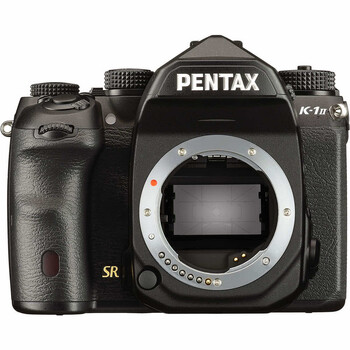
The end of DSLR cameras has been coming for some time. Manufacturers have been slowly phasing out their DSLR lens lineups over the past few years and I don’t think Canon or Nikon are making that many DSLRs at this point. At some point it won’t make sense for them to keep the lines around and the stock will dry up.
It was clear around the time of the Sony A6000 that mirrorless would usurp the DSLR in the near future, that camera had already matched much of the performance of the high end cameras. Once the lens lineups were fleshed out more and the autofocus was applied to full frame there was little reason to buy into the older systems.
I feel like things have been trending this way for a while now. DSLR is a lot clunkier than modern options like mirrorless. I own a decent one, but at this point, I’ll usually just shoot with my phone for convenience. Trying to hike or whatever with a big camera and lenses swinging around is a hassle.
An OM-3 or a Lumix GM5 are both absolutely portable, even more so than typical mirrorless bodies. Unfortunately, the OM-3 is a flagship camera, and the GM5 has turned into a collector’s item, so both are expensive.
What kind of phone? Every phone I’ve tried, pixel, iPhone, moto… Sucks the moment you look close and zoom is a lie.
I have a moto and the photos indeed do suck compared to my DSLR. But I’m a hobbyist, not a professional photographer. If I were taking pictures at an important event or something, yeah, I’d probably pack my DSLR for that. When it comes to day to day pictures, just capturing memories, it’s not worth it for me anymore.
I would love to get a mirrorless eventually though, seems like the best of both worlds.
I doubt know what Pixel does for compression but they certainly ruin their photos the second they’re saved. It looks great in the viewer, then even raws look smeary.
Zoom is better than what it used to be and not outright a lie. I still have a dual camera phone (pixel 7, standard camera and superwide), and the picture is reasonable at 2.5x. It’s a 50mp sensor that, by default, only takes ~16mp pictures by only using certain sensor cells. Zooming uses a tighter group of those cells while still making a 16mp picture. But yes, zoomed pictures absolutely lose quality as the cropping starts hitting the limits of a tiny piece of do-all glass. My phone goes to 8x. Meanwhile, the flagship phones with an additional mild-zoom cameras bump up the baseline further. Still, only equivalent to like 40-50mm on a DSLR full frame sensor. Not enough for me, not for the price, so I still lug my DSLR around occasionally, as my eye tends to prefer framing with my phone above 3x - or about 50-85mm on a crop sensor.
Using less of the sensor to take a picture and calling it zoom is a lie. That’s just cropping the picture to be smaller not zooming.
It does depend on the type of sensor, the comment above was close but a bit incomplete/imprecise. Many modern sensors use a technique called binning where the final image’s pixels are calculated by combining a 2x2 grid of sensor pixels via some signal processing, halving resolution in both dimensions but improving sensitivity and allowing for many DSP-based capabilities; whether they are actual improvements over the raw image is implementation-dependent and partially subjective. When shooting at 2x digital zoom though, you bypass the binning and use the sensor pixels directly, resulting in an image with the same “true” (non-upscaled) resolution as a 1x shot, minus the signal processing. Any other digital zoom, whether between 1x and 2x or above, is indeed a crop of a larger image.
It is a clear step above cropping a 16mp sensor to 2mp for zoom
Point and shoot and mirrorless camera are trending again. People realized that it is not about the technical quality of the image, but the experience of actually taking a picture. Cameras don’t have algorithmically tailored infinite content scrolling, and that alone is a plus for a lot of people.
At the same time, dedicated cameras still blow phones out of the water the moment you try to see the pictures in anything larger than a 6" screen. People are also starting to explore the fact that taking 5 thousand pictures that you are never going to see, share or enjoy again is dumb. Instead creating dedicated spaces and ocassions where fewer, higher quality, more sentimental value pictures can be appreciated. Phone’s are woefully inadequate for that purpose, the shadows are always a mess, values are compressed -even when they are shooting fake RAW- and now a lot of fine detail is AI generated. Which looks awful when shown even on the most modest TV screen.
I’ll still shoot birds with my DSLR, but the phone has replaced 90% of my vacation photography
Urgh, that site is full AI slop.
Damn, I didn’t notice, it was the first half decent looking source I found to post.
The new cameras are not announced, not spec’d, and not dated. There is no model name, no sensor, no price. What the company is describing is a direction, not a product you can buy.
That was what triggered me.
I’m sure fstoppers used to be a reputable source, so its kinda disappointing.
What beyond the “x, not y” construction makes this look like AI to you? Because that construction in that context actually makes sense, and LLMs are basing those overused phrasings on things humans originally wrote.
“what the x is y, not z”
It is the high density of the x, not y phrasing, and that most of the article is just waffling. I might be wrong, but IMO, that was pure AI slop.
deleted by creator
What? Why didn’t they do that a decade ago? DSLR is freaking useless with a digital camera. But apparently other brands still have them too? But why use DSLR when you can get a more exact image representation from the sensor? Seems like it’s based more on tradition than actual usefulness.
Of course if you make an old retro film camera, the system is still useful. But my guess is that is a very small niche market. It’s inferior in every way and more expensive and time consuming.
I still use my old Nikon; why? Because I can put anything that resembles a lens on it. Or make my own lenses. I made one with a cardboard tube and pieces of a broken lens. Or used a enlarger lens to take pictures. I guess it depends on what you want to do. And well my eyes still work better than digital screens. I mean I don’t need a light meter to estimate shutter speed. But then again, I’m very much into photography.
Completely irrelevant to the issue. Moving away from using mirrors has nothing to do with what lenses you can use.
I mean I was just saying I like to see through my lens with my eye?
OK, that I can understand, it may feel subjectively nicer, but there are things you can’t do technologically with an SLR, like for instance utilize the light sensitivity of the digital sensor for low light photography.
I agree, mines terrible in low light, the new tech has come a long way. I personally like to do it on hard mode. I mean I used to measure the photograph I wanted to take Ansel Adams style. So more math and planning to just take one shot. Like Adams, I’m amateur photographer and I like to do it for fun.
It’s amazing how good modern cameras are in low light.
Not just cameras, you can get cheap thermal cameras that will help diagnose electrical problems. I need one lol
I thought the same until I tried to take some pictures of some dragonflies in flight like I used to on my old DSLR. It’s pretty much impossible with how slow the display for the viewfinder is. Was relatively easy with a DSLR.
You are probably comparing a high end DSLR with a low end digital camera.
There is no reason why there should be noticeable latency on a high end digital camera. In fact the response time can be even shorter than with DSLR that has a mechanical mirror.There is no way the latency can be less than a DSLR when looking through the viewfinder. Dslrs just use a mirror there. I’m saying I couldn’t keep up with a dragonfly zipping around in midair because the viewfinder made it impossible to keep it in focus. On a DSLR it was relatively easy.
The latency between what you see and when the picture is taken is mechanical, using the viewfinder on a SLR gives zero latency while using it, but when you press the trigger, there is a latency you will never see.
With a high FPS screen for the viewfinder, the latency can easily be way below human perception.Yes I know, but the latency between the trigger pull and the photo being taken literally doesn’t matter if you can’t even frame your subject. Look I like mirrorless cameras a lot. But to say that DSLRs have no advantages over them is untrue. There are still situations where mirrorless cameras are not as ideal.
There are still situations where mirrorless cameras are not as ideal.
In similar price range?
I’ve always wondered why people were so adamant about SLRs even in the digital age. Before mirrorless cameras came out, DSLRs were the only digital option with swappable lenses but I’ve stopped keeping track. Mirrorless cameras have swappable lenses too right? I’m assuming many of them can attach the same ones used with DSLRs.
There are two types of autofocus systems that cameras use, phase detect and contrast detect. Contrast detect is what all point and shoot style cameras (and early mirrorless interchangeable lens cameras) used where they identified contrast of vertical edges and used that to determine if an image was in focus, this is a slow process as the camera needs to figure out what direction to move the focus and check the image at multiple focus positions to compare until the camera determined it was in focus.
DSLRs have a separate sensor up near the viewfinder that does phase detect autofocus, this is different in that it can determine how far the lens is from being in focus and go directly there which makes it significantly faster which was crucial in many professional applications.
Eventually sensor manufacturers figured out how to integrate a version of phase detect into the pixels of the sensor itself. While these didn’t perform as accurately as the separate phase detect arrays in DSLRs, they had an extra trick where they were able to create a hybrid autofocus system that used the phase detect array to get close and then contrast detect to get accurate focus. It was only once this was implemented on mirrorless cameras that the advantages of SLR disappeared.
For a long time mirrorless cameras had terrible battery life and no phase detect autofocus.
A DSLR doesn’t need to keep a screen powered all the time you’re looking through it. Improvements in the battery life of MILCs has made that non-issue for most people though.
Ah, of course! The battery life makes total sense. I’ll have to research what phase detect autofocus means, but thanks for answering.
Yes they can. the technical difference is only in how the viewfinder works.
Yeah, as long as the camera and lens have same lens mount.
Edit: or an adapter I guess.
Thanks, that’s good to know. I wanna get back into photography since the mirrorlesses are so compact now, but being able to keep my lenses was one thing I needed to know about before selling my old DSLR.
Which DSLR do you have?
It’s ancient. I have an Eos Kiss X4. I think it’s called Rebel ok n North America.
I assume you may need to get an adapter to keep using old lenses after getting new camera. Cannon has 3 different lens mount types from what I know.
The mirrorless lineup from manufacturers has a different mount than their dslrs.
DLSRs are a budget option usually compared to a Mirrorless Camera (what I assume you mean when you say digital)
DLSRs are a budget option usually compared to a Mirrorless Camera
No SLR is the ones with the mirror. DSLR are digital with a mirror. And they are definitely not “budget”, they are the high end. Except today on a high end digital camera the mirror is not necessary as you can use the sensor for the viewfinder instead.