Raspberry Pi is actively preventing enthusiasts from upgrading soldered memory to a larger configuration even when the replacement chip is technically compatible. The company says the restriction is intended to discourage unofficial high-capacity resales.


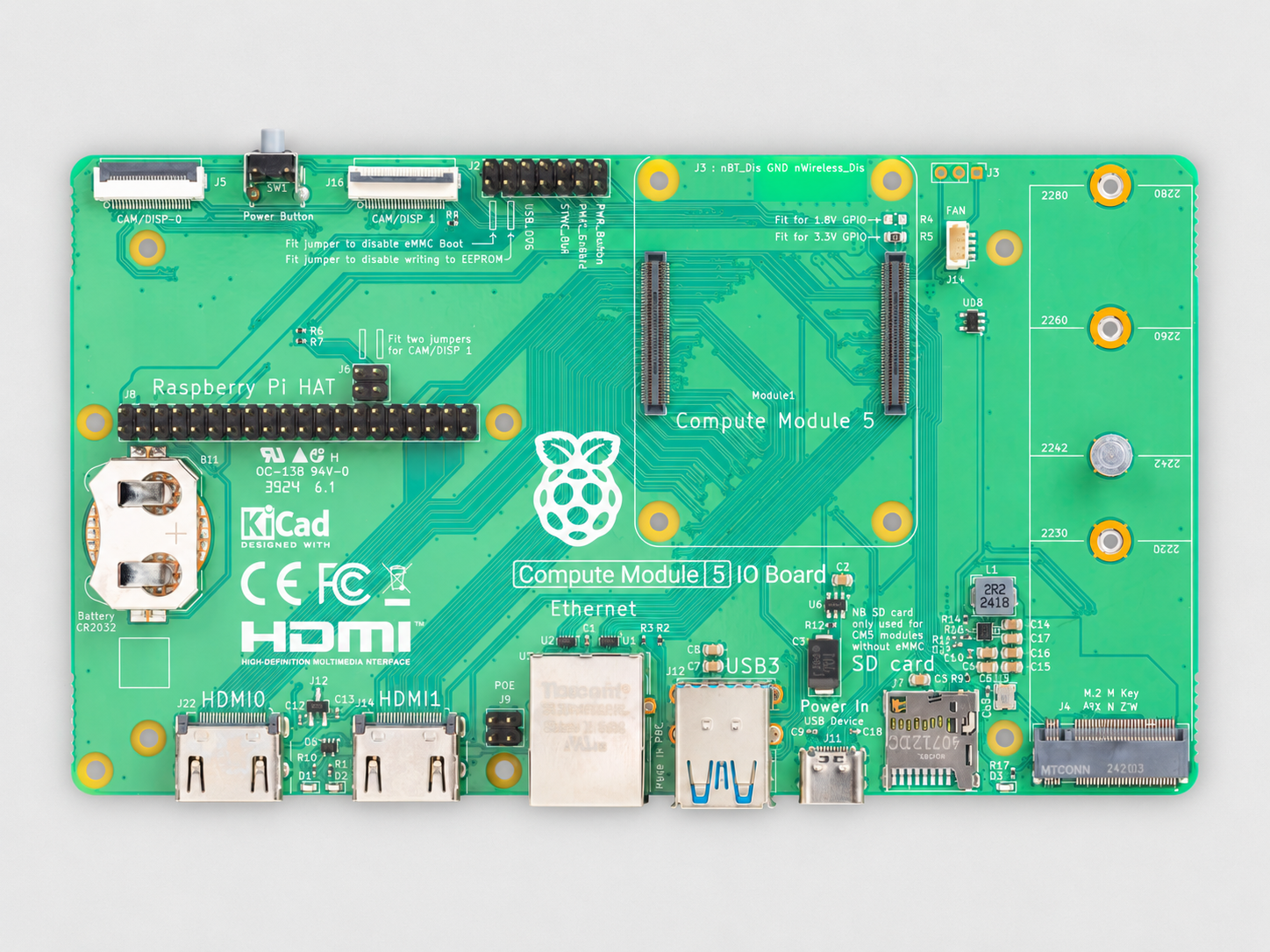
This makes sense. Hear me out.
A CM5 is a device designed to be embedded into other devices. I believe most of their sales come from just that- companies that make other things, and build a CM5 into them rather than design their own control board.
As you go up through the model tiers, the price increases faster than the added price of memory. IE, if the 2gb one is $20, and the difference between a 2gb memory chip and an 8gb memory chip is $10, the 8gb unit isn’t $30 it’s $60. You pay RPi a premium for the high end products.
Desoldering RAM off a production PCB is something no hobbyist is going to bother with. BUT, a company buying 10,000 of these to build into their product MIGHT find it cost effective to setup a production line to do so. And they could probably resell the 2gb chips.
Point being- while I don’t like this, and I don’t like the ideas it represents, I also understand why they are doing it. It’s not about us, the hobbyists. It’s about the manufacturers that build compute modules into their products.
What’s the problem with a company doing what they want with hardware they purchased and own?
In concept nothing. But do you also recognize a legitimate business model of selling multiple products at different price points, spaced out more than the different cost of production?
And speaking hypothetically with some stupid numbers is it your argument that they should be able to purchase the $20 product, add $10 of parts, and either use it or sell it as the $200 product?
Yes of course, but if the spacing is too much then stuff like this starts to happen.
Yes, once I buy something it’s mine to do with as I want. Obviously warranty may be void in some cases, but otherwise I own it.
If the market exists that is willing to buy it as a $200 product then Raspberry Pi should sell them for that price, their costs would be much lower than someone who buys a Pi at retail, buys new RAM chips, spends the time to desolder and solder on the new RAM chips, market their ‘product’, and deal with shipping it. If the knockoff is $200 and the same-spec legitimate Pi with warranty is $200, the knockoff won’t be around for long.
The fact that it is economically viable to resolder different chips, is already showing it’s a illegitimate business model, imo…
Not a product, but a money grab
enshitification always makes sense. Hear me out.
Governance
It seems the Trustees can’t be trusted
And yet they had an IPO 2 years ago
But it’s a foundation, with a charitable goal…
And yet they had an IPO 2 years ago
Yes, companies need to make money. It’s kind of what they do.
Yeah just like cancer needs to spread and grow. It’s just what cancer does. It does make sense.
But, never the less, we’re still going to cut the cancer out someday.
Either that, or the cancer will end up killing us.
And, curiously, kill itself in the process.
We sure are, comrade, we sure are.
Ever heard of “repair” when no original spare parts are available?
According to the article you can still do this. It’s just you can’t replace a 2 GB with an 8 GB because the board will still only recognize 2GB of that chip.
This is to prevent the resellers from buying 2 GB boards for cheap, replacing them with cheap 8 GB chips, and then reselling them for just under retail of the official 8 GB boards.
The article also states that you likely can’t use just any compatible chip, the part number is baked into the board, so you might not even be able to swap out a 2GB SK Hynix with a 2GB Samsung chip
it does not say part number is baked in. it says parameters are baked in (latencies, frequency), and so chips with a different part number might not work.