

-
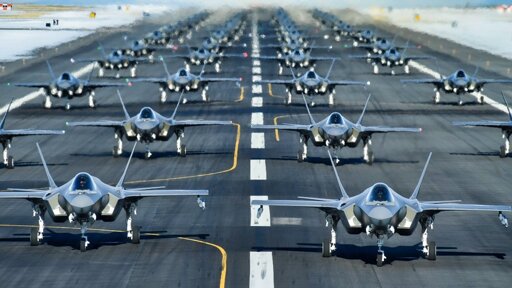
While 16 F-35 fighters remain contractually committed for delivery starting this year, the full 88-jet procurement is stalled amidst trade friction with the Trump administration.
-
Rising program costs—now estimated at $30 billion—have reopened the door for Saab’s JAS 39 Gripen E.
-
The Gripen offers superior industrial benefits, including 12,600 domestic jobs and Arctic-optimized maintenance.
-
Ottawa must now balance the F-35’s unmatched NORAD interoperability against the Gripen’s economic sovereignty as the aging CF-18 Hornet fleet reaches its structur
Removed by mod
No, the Iranians haven’t discovered a kind of radio wave that the rest of us just missed. The “almost” in almost invisible means something, and there’s a variety of situations that can dramatically increase the radar signature, or that can make radar not the important consideration at all.
Modern “stealth” aircraft like the F35 uses split-ring resonator patterns in the skin of the aircraft. This is much more durable than the iron spheres suspended in a top coat that the F-22 and older aircraft use. (There’s a reason why the F-22 can’t be left out in the rain). The problem is that the resonator pattern is highly dependent on radar frequency. So yeah, the Iranians may very well have found radar frequencies that aren’t absorbed very well by the F-35.
The details are classified, but just a look at the visible design and common sense about if the engineers were dumb will tell you they didn’t only pay attention to a few frequencies. The coating isn’t only (a variety of) split-ring resonators either, it sounds like there is a chemical component of some kind.
From what I’ve heard, any frequencies where they’re weak will be very low ones, which both require bigger, more obvious equipment and are less precise. And even then it might be a matter of a basketball-sized signature rather than a golf ball-sized one, and will be somewhat directional.
Removed by mod
Sure, but the rest of the sky (AKA outer space) is non-reflective, so how do you get your negative return?
This falls in the “why don’t you just” category of talking about fields you don’t understand. Sure, there’s an actual good idea you’re moving towards, but it’s kind of clear you don’t know what you don’t know.
It’s not a Boeing.
Every single “Wasn’t the F-35 supposed to be invisible, haha I am so smart” post is basically just “Aren’t vaccines supposed to be 100% effective???” all over again.
Iranians have used conventional optical tech. The promise of the F35 is to be detected late by conventional long range radar. They were never supposed to be invisible or quiet.
Granted that makes the stealth advantage very limited in terms of usage: coming from far away undetected. Then be very visible.
Besides yes, China claims they can detect them with their satellites network and a France military equipment maker is apparently developing a radar that detects stealth jets. So that advantage is apparently not going to last.
Given that modern air combat is all about beyond visual horizon attacks, I’m not sure how being hard to detect by non-visual means is limited in terms of usage.
Let’s step back a bit: stealth is about reducing the apparent size for radars. Being stealthy doesn’t mean you’re undetectable, but you will see a (non-stealth) enemy jet before it sees you. Then you fire a missile… and are instantly detected!
Air combat superiority will do only if you’re still beyond missile range at that point. Otherwise the other side also shoots back a long range missile at you, and it’s likely to end in mutual destruction. And even if it’s not, you revealed yourself, so better not be outnumbered. That reduces the usage in air combat.
For air to ground, which is what happened here, same idea, except there are a lot of things you want to drop on a target that requires a certain proximity. The benefit of the F35 is it can theoretically take out air defence systems before being detected (again: providing the enemy radar does not have one of these next-gen fancy radars that can detect it). That’s what happened in Iran… except that the whole scenario assumes once again conventional air defence: SAM batteries are typically massive and well “visible”. They were destroyed before any jet would get close. But Iranians have APPARENTLY (I don’t think that was clarified) used a much smaller launcher that conventional SAM, maybe even on man’s shoulder, that was not destroyed, and worse: since it was optical/IR based, it didn’t emit any radar signal and the F35 didn’t see it coming (it didn’t launch flares nor done any evasive move).
So, once again, the F35 niche app was to take out SAMs and that was revealed insufficient.
Now, was it an excess of confidence and could the F35 have performed its mission without exposing itself so much? We don’t know. But the point is this is a flagrant demonstration of the limit of the “stealth” claims that often sound like a magic invisibility coat. I maintain: stealth does not have that many use cases!
This simply isn’t true. Long range air to air missiles have to lock onto a radar return. The enemy might be aware that you’ve launched a missile at them, and that might tell them where you are, but it doesn’t give them a missile lock on you in return. If your stealth is better than their detection, return fire becomes significantly less likely to be able to accurately target you before your missile hits.
Removed by mod