I had a similar matrix of screens at my old job: Seismic survey observer desk. Three rows tall, four columns wide.
They weren’t all connected to the same PC, though; If I remember correctly:
Top row was one PC (linux)
Middle row was another (linux)
Bottom left was its own PC (It ran msdos 6.22. Excellent OS for realtime stuff!)
Bottom right was its own (linux)
middle two at the bottom was windows.
They were all connected to a Raritan KVM switch, so I used that to select which row to control. The exception was on bottom left and bottom right which had a dedicated keyboard and mouse.
I have a picture of it somewhere, but I can’t seem to find it.
Not sure if it’s still in use today, but the above description was 2008 through 2012. Msdos was used for “gun timing”, which basically amounted to extreme precision when it came to opening or shutting some solenoid valves. The computer had a GPS input and a bunch of serial outputs, and a control line (also serial).
The control line sent instructions of which solenoid to open when, a time reference was determined by the GPS, and you can probably guess what the serial outputs were for.


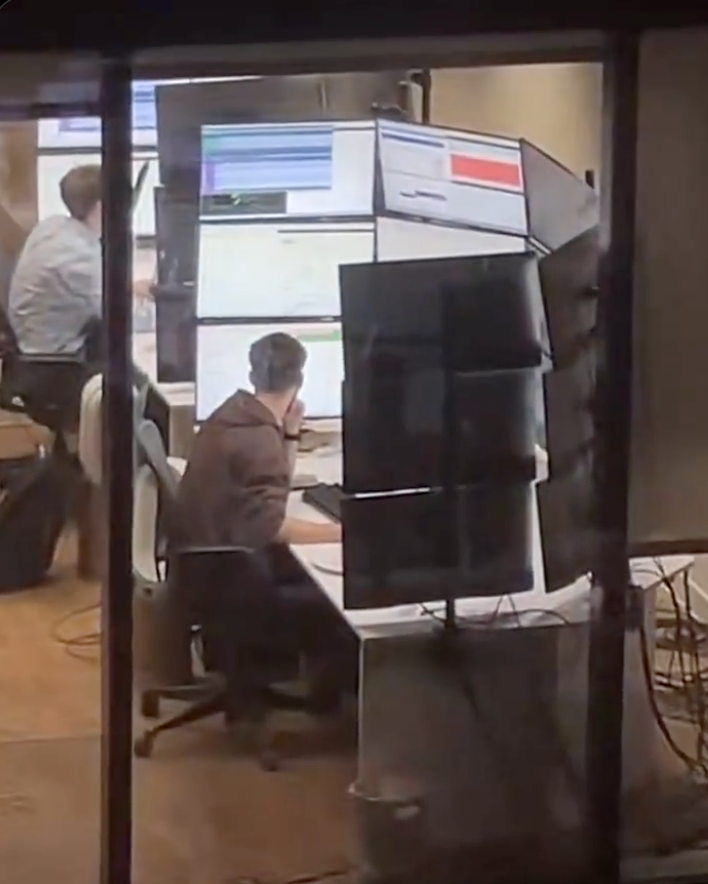
I had a similar matrix of screens at my old job: Seismic survey observer desk. Three rows tall, four columns wide.
They weren’t all connected to the same PC, though; If I remember correctly:
They were all connected to a Raritan KVM switch, so I used that to select which row to control. The exception was on bottom left and bottom right which had a dedicated keyboard and mouse.
I have a picture of it somewhere, but I can’t seem to find it.
you’d love synergy. it’s a client you install on multiple devices and allows you to share one keyboard and mouse across as many devices as you want.
you can even share the clipboard too.
Well aware of it. Used it between the top two rows.
really? I used 6.22 back in the day - what’s it still being used for these days?
Not sure if it’s still in use today, but the above description was 2008 through 2012. Msdos was used for “gun timing”, which basically amounted to extreme precision when it came to opening or shutting some solenoid valves. The computer had a GPS input and a bunch of serial outputs, and a control line (also serial).
The control line sent instructions of which solenoid to open when, a time reference was determined by the GPS, and you can probably guess what the serial outputs were for.