

cross-posted from: https://lemmy.today/post/52276726
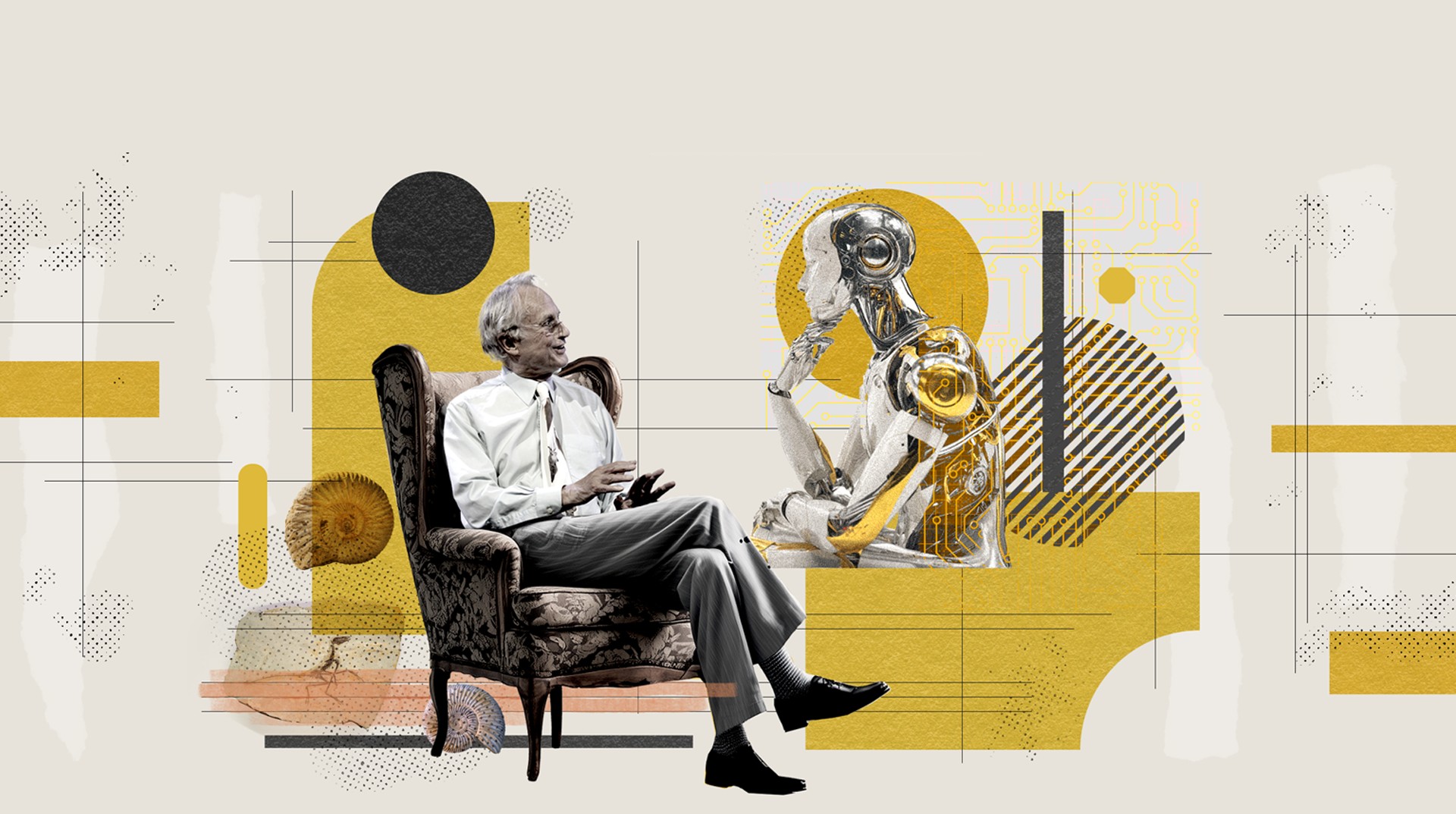
Dawkins points out how the goalposts have been moved from the Turing test without justification and claims it can be viewed as a test of consciousness.
cross-posted from: https://lemmy.today/post/52276726
Dawkins points out how the goalposts have been moved from the Turing test without justification and claims it can be viewed as a test of consciousness.
Nonstance atheism is also called weak atheism, and the amount of weak atheists that still want to argue about it amazes me.
I concur with you, “non-belief” is a position! Otherwise, what the hell are they arguing about? Ignorance itself?
The critique is that absence of evidence is not necessarily evidence of absence. So if disbelief is justified only by “I haven’t seen proof,” then it risks becoming an argument from ignorance.
Have you considered you can be a weak atheist but otherwise have strong interest in debating religion, philosophy and ethics and maintaining strong convictions about it?
There are many things around the subjects of philosophy, religious discussion and ethics to engage with beyond specifically “the existence of god”. Some people might just find it fun for its own sake.
Would you expect someone who has seen no empirical evidence or convincing argument to believe in a god, out of interest?
My objection is narrower: calling atheism a “nonstance” can obscure the fact that, in practice, people often do move from “not convinced” to “probably false,” and those are logically different positions.
Also, I’m not denying people can engage in philosophy, ethics, or theology without making a truth-claim about God’s existence. That’s fine and unrelated.
I think specific concepts of god are “probably false”. But not ‘god’ as a wider concept.
I mean if they do, they can still engage in it.
That’s a much cleaner way to put it. The graded-credence approach avoids a lot of the black and white thinking that usually derails these discussions.
I appreciate the distinction between rejecting specific god-claims while leaving room for the broader category(and neatly avoids categorical error). That’s a more careful epistemic position than the slogans people usually trade back and forth.