

Without control of the White House, there is of course only so much Democrats can do with their newfound power. And in the context of the myriad horrors of the first half of President Donald Trump’s second term, talking about what the party “should” do next is roughly analogous to deciding which out-of-control forest fire to fight first: There is not enough water, there are lots of worthy candidates, and all of them are getting worse.
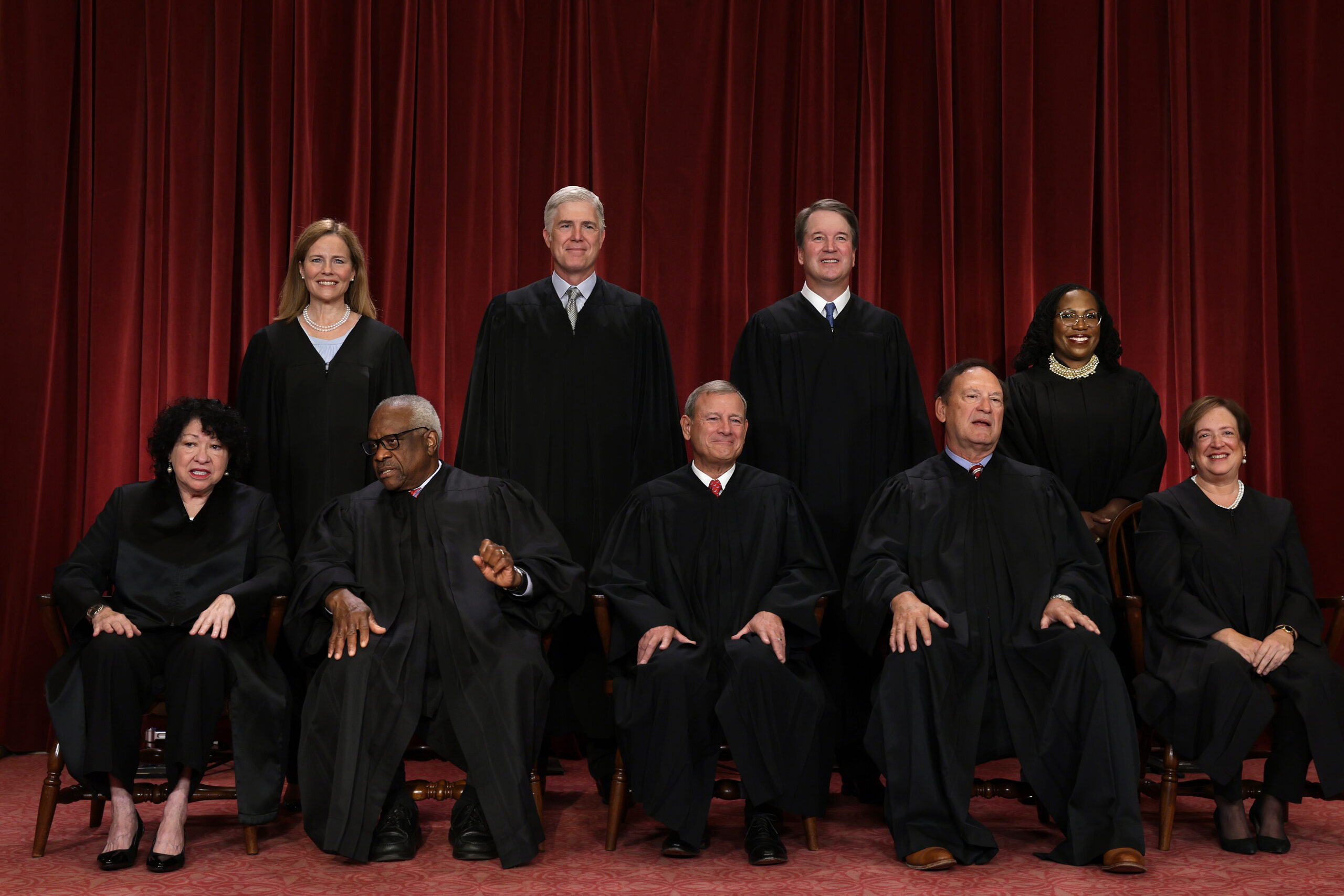
One thing must be true, though: Whatever issues Democratic lawmakers choose to focus on—and, as the 2028 ideas primary gets underway, whatever ambitious ideas Democratic presidential hopefuls choose to support—the party must also have a plan for taking on the Supreme Court, which remains an existential threat to anything Democrats might hope to accomplish. Even if the party is fortunate enough to win a trifecta—the House, the Senate, and the White House—in 2028, things like a Green New Deal and Medicare for All and a new Voting Rights Act do not stand a chance before this six-justice conservative supermajority. Regrettably, what I wrote in 2020 is just as true today: If Congress passes any one of these proposals into law, the only real question is which justice ends up writing the opinion that kills it.
I think 9 judges is probably fine, but they should be term limited to 18 years, and we replace one judge every 2 years. Every president would get to seat a minimum of 2 judges. It would limit all the politicking around placing a judge, it would also eliminate the game of placing a young idealist that can server for 50 years.
It should be a pool of judges, and 5 or 7 or 9 or whatever are chosen at random for each case
Ah good old Athenian system. It’s very smart, and it works. If you can get the randomization unbiased and dependable. I think something mechanical, like those old lottery flying ping pong things.
The randomization being unbiased is the easiest thing possible. The choices being unbiased themselves is an entirely different beast
The choices will always be biased by design because we would be electing the people up for being randomly picked. Which is fair, I mean, that’s the point.
The randomization thing might be a “trivial problem”, but performing it in a matter that leaves no room for debate over whether the result was actually fair and real, that’s the issue. You need people to trust the process.
But I’ve said for the longest time, this is actually a working method that could cut out a lot of corruption in politics. If you have a pool of people, rather than just a single choice between two of them, it gets much harder for financial interests to bribe them, because they’d have to spend way more money and effort doing it.
This is basically proportional parliamentarism, or whatever, but it adds something important.
In any case, the two party state is just a one party state with schizophrenia. It has to go.
I mean at that point just have the supreme court be elected. Split the country up into 9 regional districts and have each one elect a judge. Every 2 years have 3 of them up for re-election and every 6 years you get a full reset.