There was fun article years back pointing out that regardless of the “we don’t make anything anymore” narrative, the US has never been lower than the 2nd largest manufacturer in the world.
How’s that narrative go when looking at raw material processing? My understanding is that a decent amount of products we manufacture nowadays have their parts manufactured elsewhere in the world and then are just assembled in the US. That would certainly shift the narrative a bit I think.
This is a genuine question. I know we probably still make our own petroleum products, we haven’t manufactured steel since the 1990s, with the collapse starting in the 80s, but everything else is an informational gap for me.
The article was mostly talking about how manufacturing has changed, becoming less blue collar and more white collar. Far far fewer people are employed at higher salaries due to automation (robots). So manufacturing can’t support entire towns like it used to. Plus what we manufacture has changed - it’s much more high end, high value products.
The US still makes steel for example. It fell compared to the 1960s, but is still at about WW2 levels. That is true for a lot of US manufacturing. The industry is still around, but has not grown since years and automation and falling prices makes them less relevant to the overall economy.
That is surprising and very contrary to the narrative I’ve been hearing. I’d heard that our steel production had dropped to trivial values after the Pittsburgh forges had gone under.
My town’s steel mill is overbooked and absolutely cleaning up financially. A casino moved in a few years ago, bought almost all the land around the mill, and wanted to buy them out for space to make the hotel bigger. The mill basically said, “You literally can’t pay us enough.”
So now we’ve got a steel mill in the middle of a casino’s parking lot.


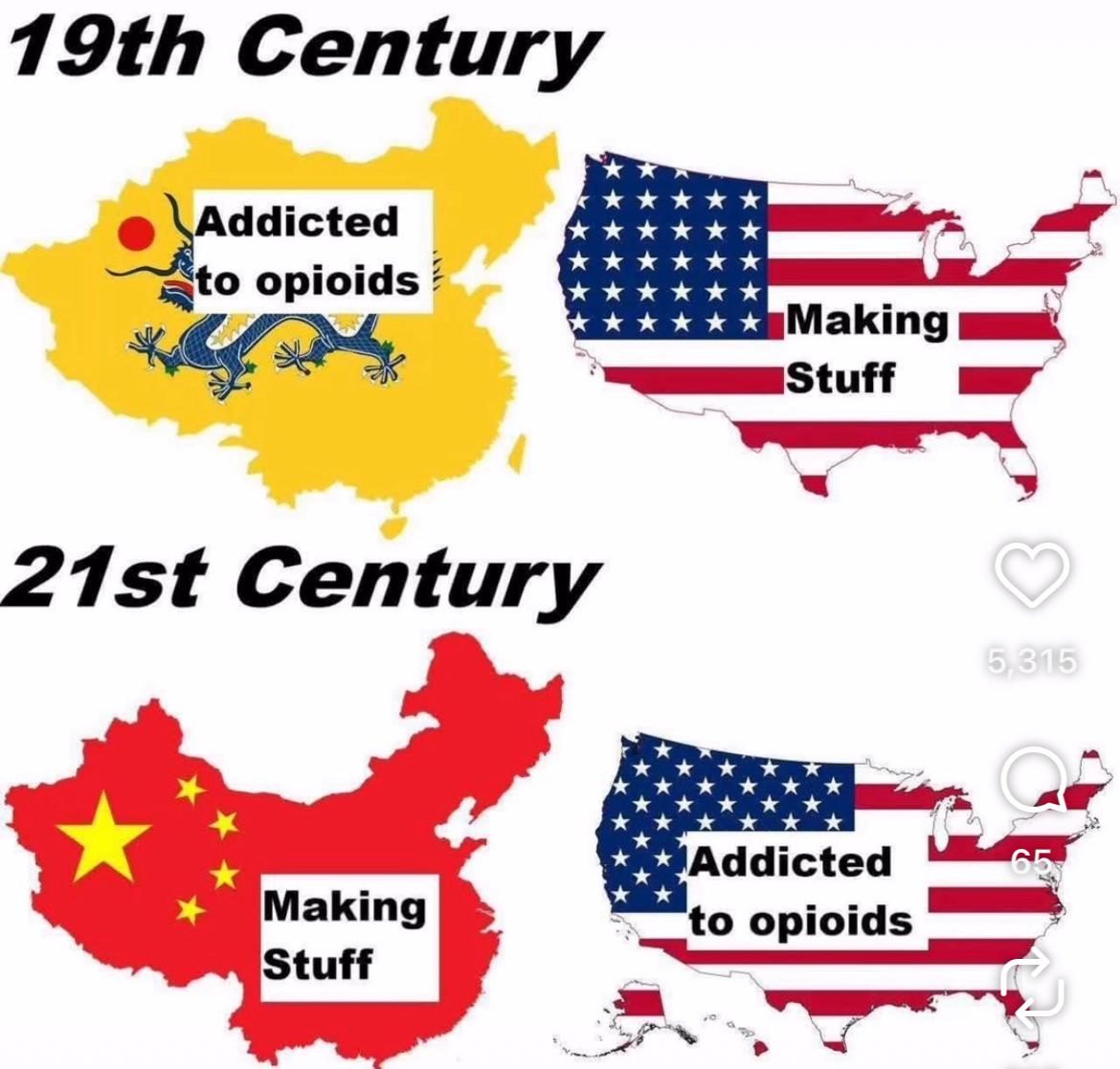
There was fun article years back pointing out that regardless of the “we don’t make anything anymore” narrative, the US has never been lower than the 2nd largest manufacturer in the world.
How’s that narrative go when looking at raw material processing? My understanding is that a decent amount of products we manufacture nowadays have their parts manufactured elsewhere in the world and then are just assembled in the US. That would certainly shift the narrative a bit I think.
This is a genuine question. I know we probably still make our own petroleum products, we haven’t manufactured steel since the 1990s, with the collapse starting in the 80s, but everything else is an informational gap for me.
The article was mostly talking about how manufacturing has changed, becoming less blue collar and more white collar. Far far fewer people are employed at higher salaries due to automation (robots). So manufacturing can’t support entire towns like it used to. Plus what we manufacture has changed - it’s much more high end, high value products.
The US still makes steel for example. It fell compared to the 1960s, but is still at about WW2 levels. That is true for a lot of US manufacturing. The industry is still around, but has not grown since years and automation and falling prices makes them less relevant to the overall economy.
That is surprising and very contrary to the narrative I’ve been hearing. I’d heard that our steel production had dropped to trivial values after the Pittsburgh forges had gone under.
My town’s steel mill is overbooked and absolutely cleaning up financially. A casino moved in a few years ago, bought almost all the land around the mill, and wanted to buy them out for space to make the hotel bigger. The mill basically said, “You literally can’t pay us enough.”
So now we’ve got a steel mill in the middle of a casino’s parking lot.
US iron ore mining, 1890-2014 (Wikipedia)

Not even in 1600?
Eh… what?! The World existed before the US? Get out of here… /s
🤨🤔😐You win this round, smartarse!
It just shows how much of world economy doesn’t make stuff.