D&D empowers a small group of people to individually gain power and eventually exert outsized influence on intra- and international politics, even entreating with godlike entities.
D&D is just a power-fantasy. Where that fantasy leans (politically/ideologically) is just the GM’s setting.
That’s a good point. I guess in a sense that means the game does structurally promote power fantasy play, but I still don’t think it lends itself exclusively to that kind of play.


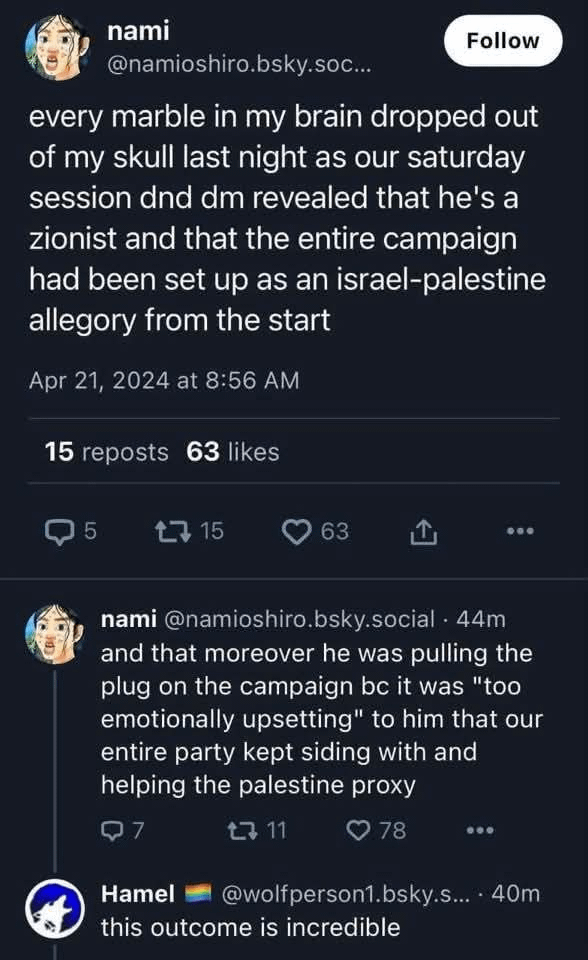
D&D empowers a small group of people to individually gain power and eventually exert outsized influence on intra- and international politics, even entreating with godlike entities.
D&D is just a power-fantasy. Where that fantasy leans (politically/ideologically) is just the GM’s setting.
Power fantasy is one of the more common modes of a D&D game, but it’s not the only one nor does the game structurally force it.
You don’t believe that leveling up and increasing your attributes, core components of the game, are inherently reflectively of power fantasy?
That’s a good point. I guess in a sense that means the game does structurally promote power fantasy play, but I still don’t think it lends itself exclusively to that kind of play.
No, it doesn’t exclude play not centered on its power fantasies.
But its structure (and the structure of the ubiquitous ‘rags to riches’-style of heroes’ story) does support it.
Remember this subthread is a response to someone expressing surprise that D&D isn’t solely the domain of [liberal/leftist] nerds.