I looked at the premise of his book that this article seems to connect with, and it basically boils down to “History shows that societies becomes a lot more peaceful and productive after periods of war.”
Wow, who’d’ve thought that things get better for the people who survive a war? It’s a good thing we can apply survivorship bias to the whole of human history with such confidence like that.
That was not how I read the article at all. What it is arguing is essentially that people benefit from the presence of order, especially when it includes larger numbers of people, but that historically such order only tends to come about through warfare. By all means disagree with this—though you might consider reading the article if you haven’t so that you are responding to its actual points—but it has nothing to do with people doing better merely because they have survived the war.
Is that compared to the war itself, or the time before it? I have a doubt. We were all told that we were in a historic era of peace before things kicked off this month, so the bar is set pretty high. Plus, even after the dust settles, the entire Northern hemisphere will likely still be up to its collective asses in fascists with way too much power to turn around and do it again.
So it’s not that war makes things better, but that we become better off after we stop fighting? We become better off after we decide fixing our problems peacefully is a good idea? Brilliant.
It’s also not true when you consider all the times war follows war and societies see decades if not centuries of decline involving numerous civil wars. On top of that, when war is not devastating for those that start it, it does not inspire them to change; rather it becomes part of their norm.


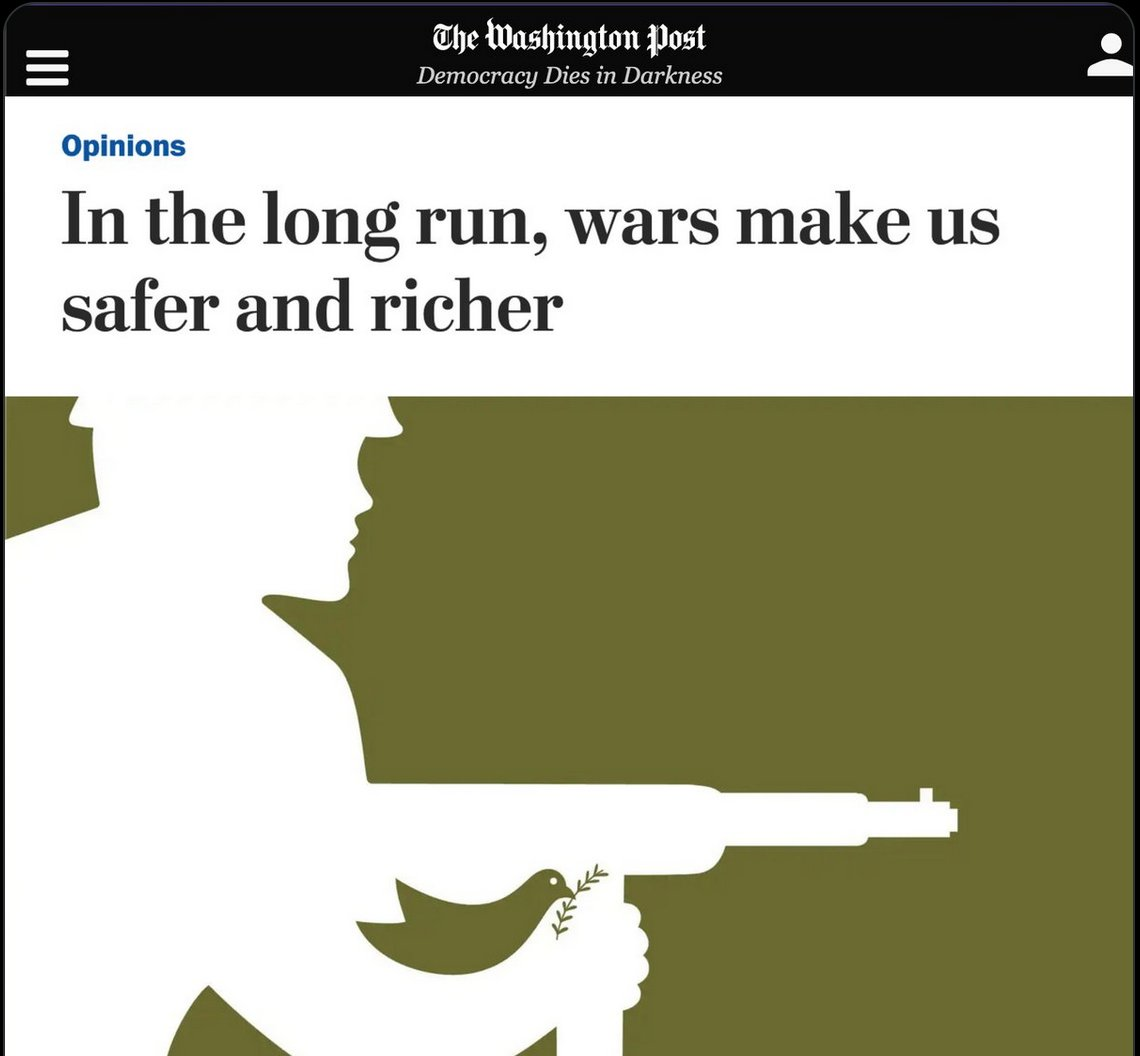
I looked at the premise of his book that this article seems to connect with, and it basically boils down to “History shows that societies becomes a lot more peaceful and productive after periods of war.”
Wow, who’d’ve thought that things get better for the people who survive a war? It’s a good thing we can apply survivorship bias to the whole of human history with such confidence like that.
That was not how I read the article at all. What it is arguing is essentially that people benefit from the presence of order, especially when it includes larger numbers of people, but that historically such order only tends to come about through warfare. By all means disagree with this—though you might consider reading the article if you haven’t so that you are responding to its actual points—but it has nothing to do with people doing better merely because they have survived the war.
Is that compared to the war itself, or the time before it? I have a doubt. We were all told that we were in a historic era of peace before things kicked off this month, so the bar is set pretty high. Plus, even after the dust settles, the entire Northern hemisphere will likely still be up to its collective asses in fascists with way too much power to turn around and do it again.
So it’s not that war makes things better, but that we become better off after we stop fighting? We become better off after we decide fixing our problems peacefully is a good idea? Brilliant.
It’s also not true when you consider all the times war follows war and societies see decades if not centuries of decline involving numerous civil wars. On top of that, when war is not devastating for those that start it, it does not inspire them to change; rather it becomes part of their norm.