Closet Cases – Republicans secretly love what they publicly hate So far in 2022, more than 300 anti-LGBT bills have been proposed across 36 states – at least one third of which are directed at trans youth. This surge, especially in anti-trans legislation from Republicans, stands in stark contrast to a startling fact. Republicans love […]
Interesting data, though I wonder if they are indicative of queer people being more likely to look to the internet to express their sexuality in places where it’s less safe to do so otherwise. The article does attempt to correlate hostile attitudes with higher search frequency, but the obvious limitation with their model is that search data are aggregated per metro area.
It wouldn’t be surprising if people living in more openly hostile regions were significantly more likely to be repressing their sexuality/gender, imo
I don’t suspect it’s necessarily that. Queer people are, but these terms are much more associated with chasers. Ultimately though, the majority of people attracted to trans women are cishet men. Filtering for chasers will likely widen that lead by filtering out the trans people and the people who have more positive platonic contact with trans people, which will be weighted towards the queer community thanks to our shared community.
One could argue that in these places these cishet men have less access to trans people IRL, but I’m not so certain that the sort of person who searches for a slur for trans women is going to actually have a harder time fucking one irl in Wichita Falls than in Portland. Sure there’s a hell of a lot more in Portland, but they’re more likely to have access to community that warns them not to, better sexual partners (real or perceived), non sex work income that pays the bills, and reasons not to turn to hard drugs.
Thanks for the perspective. I hadn’t really considered what type of person would be more likely to use those specific search terms, honestly, but you’re right. I’m wary of narratives about “secretly gay” republicans; a fetishistic explanation seems a lot more plausible
I’m wary of that narrative as well, though I have a nuanced take on that one as well. Long story short, the most dedicated and committed homophobes are often queer and doing it in the hopes of resolving their guilt and girding their desires. This becomes a means for gay people to act as the enforcers of homophobia. It’s why you’ll often see homophobic politicians and conversion camp workers turn out to be gay, but it’s less common for a mega church pastor to turn out gay unless they’re predominantly focused on homophobia.
Also, I will add some cis people seem to turn to transphobia specifically because they’re attracted to us. It’s tied to insecurity in the perceived effects of that attraction to their orientation, especially when that orientation is important to them like a homophobic straight man or a lesbian separatist with a terfy background.


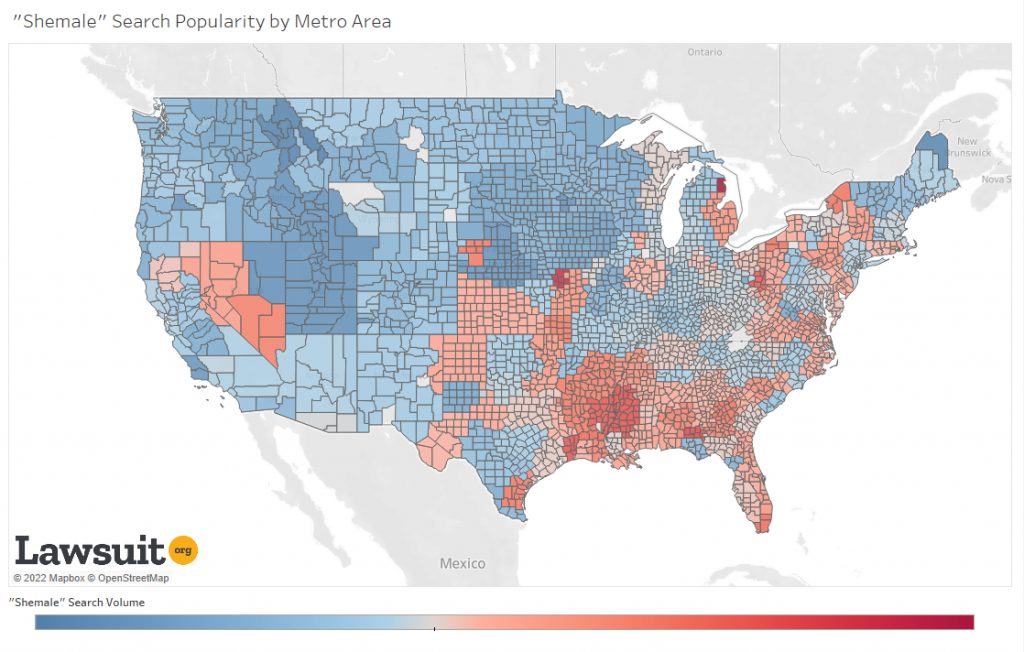
Interesting data, though I wonder if they are indicative of queer people being more likely to look to the internet to express their sexuality in places where it’s less safe to do so otherwise. The article does attempt to correlate hostile attitudes with higher search frequency, but the obvious limitation with their model is that search data are aggregated per metro area. It wouldn’t be surprising if people living in more openly hostile regions were significantly more likely to be repressing their sexuality/gender, imo
I don’t suspect it’s necessarily that. Queer people are, but these terms are much more associated with chasers. Ultimately though, the majority of people attracted to trans women are cishet men. Filtering for chasers will likely widen that lead by filtering out the trans people and the people who have more positive platonic contact with trans people, which will be weighted towards the queer community thanks to our shared community.
One could argue that in these places these cishet men have less access to trans people IRL, but I’m not so certain that the sort of person who searches for a slur for trans women is going to actually have a harder time fucking one irl in Wichita Falls than in Portland. Sure there’s a hell of a lot more in Portland, but they’re more likely to have access to community that warns them not to, better sexual partners (real or perceived), non sex work income that pays the bills, and reasons not to turn to hard drugs.
Thanks for the perspective. I hadn’t really considered what type of person would be more likely to use those specific search terms, honestly, but you’re right. I’m wary of narratives about “secretly gay” republicans; a fetishistic explanation seems a lot more plausible
I’m wary of that narrative as well, though I have a nuanced take on that one as well. Long story short, the most dedicated and committed homophobes are often queer and doing it in the hopes of resolving their guilt and girding their desires. This becomes a means for gay people to act as the enforcers of homophobia. It’s why you’ll often see homophobic politicians and conversion camp workers turn out to be gay, but it’s less common for a mega church pastor to turn out gay unless they’re predominantly focused on homophobia.
Also, I will add some cis people seem to turn to transphobia specifically because they’re attracted to us. It’s tied to insecurity in the perceived effects of that attraction to their orientation, especially when that orientation is important to them like a homophobic straight man or a lesbian separatist with a terfy background.